All articlesAudit Sampling
Audit Sampling Under ISA 530: Random Sampling vs Monetary Unit Sampling
Smart Audit Team · 2 min read · 15 Oct 2026
Choosing the right sample, deciding how much to test, and evaluating results
With 25,000 purchase transactions, you can't test them all, and a handful picked on gut feel won't give enough assurance. ISA 530 – Audit Sampling gives the structure. Here's how it works, and how to choose between Random Sampling and Monetary Unit Sampling (MUS).
1. What ISA 530 requires
ISA 530 sets no fixed sample size and no single method. It sets a path every sample must follow:
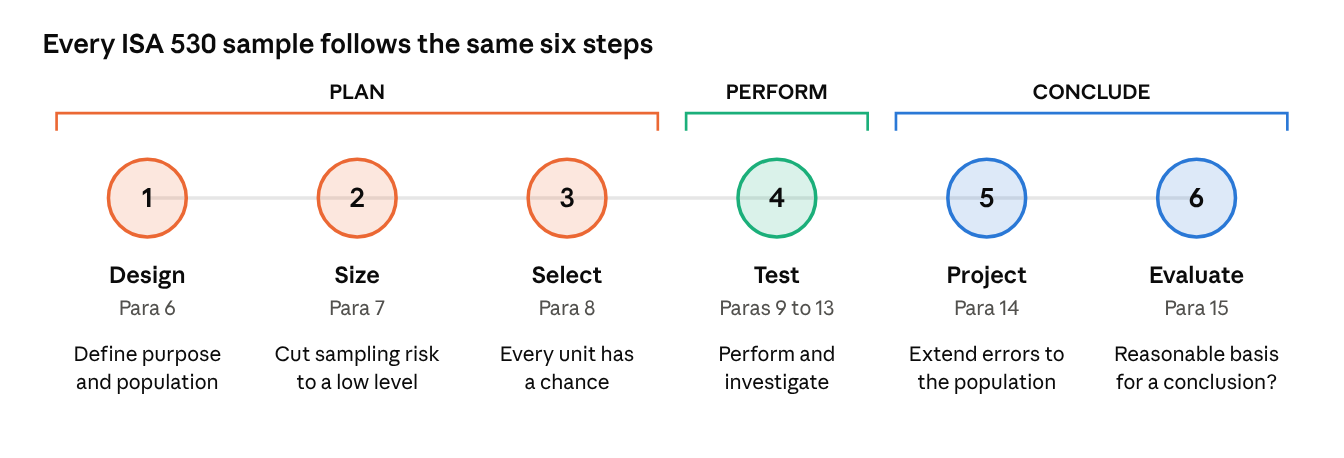
ISA 530 sampling lifecycle · 6 steps
The goal isn't a target number of tests. It's a reasonable basis for a conclusion about the whole population.
2. Random sampling vs MUS
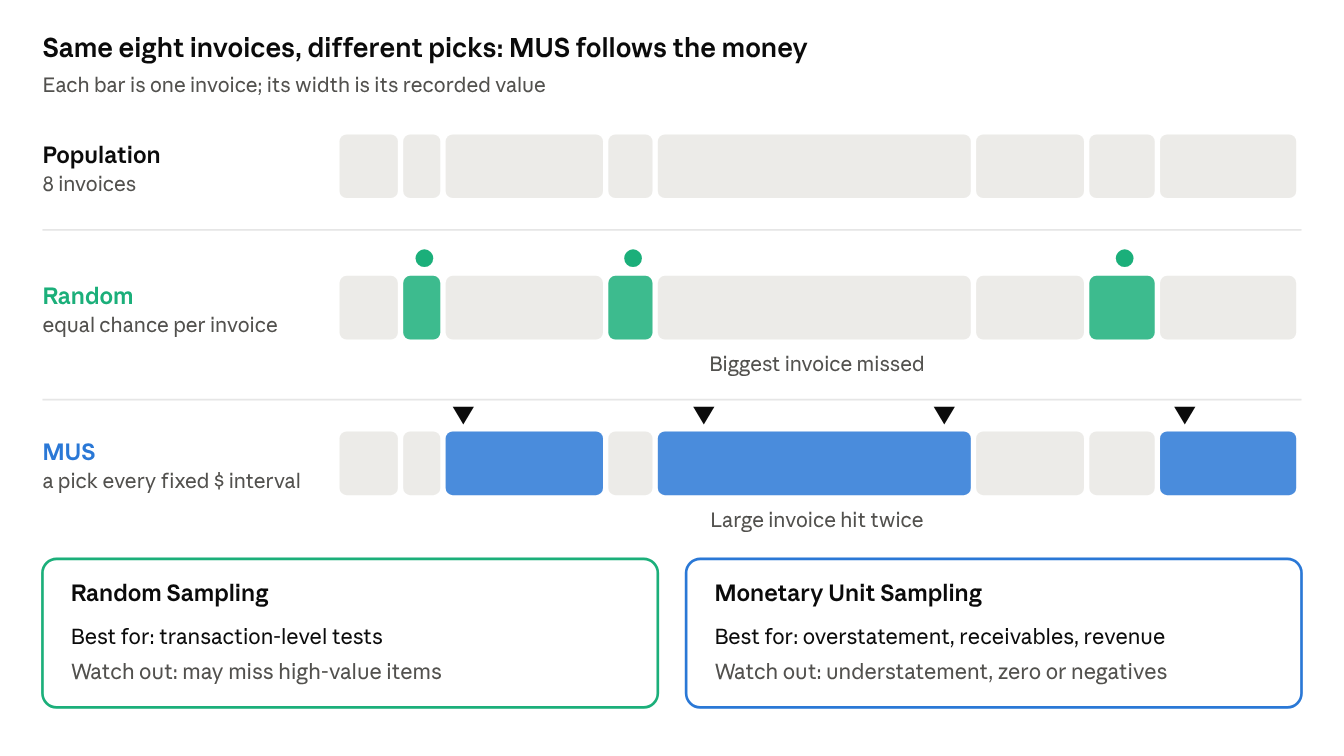
Random sampling vs MUS · how each picks items
Under MUS, an item's chance of selection grows with its value:
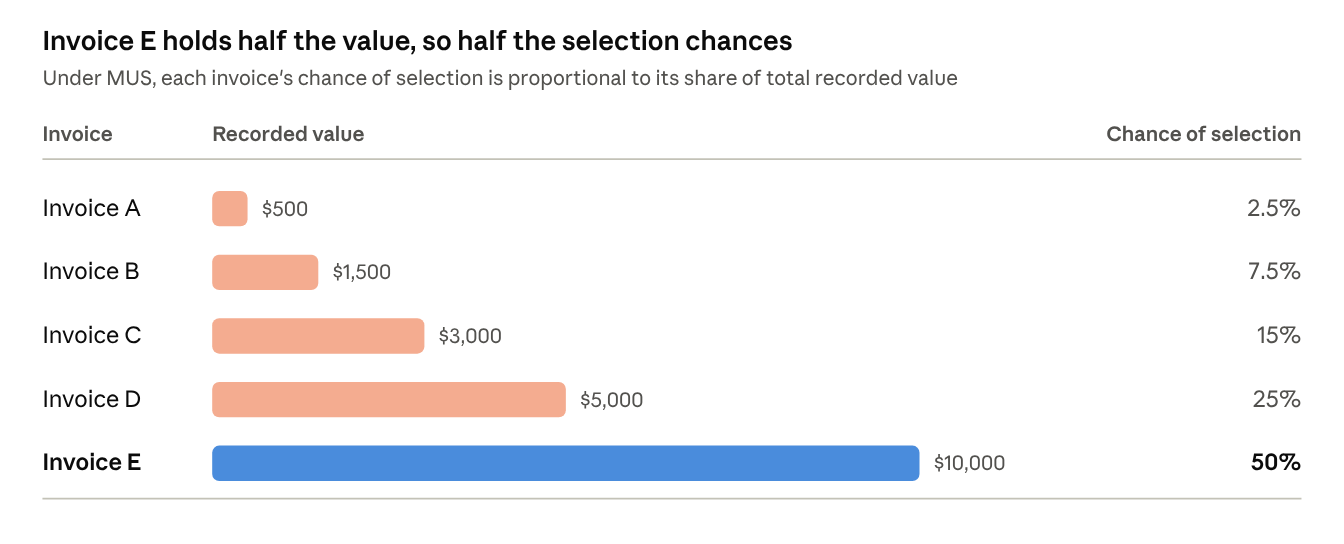
MUS selection weighting · 5 invoices totalling $20,000
MUS selects at a fixed interval: a $1,000,000 population with 50 selections gives a $20,000 interval from a random start. The interval is the selection mechanism, not a sample-size method.
Let the audit objective choose the method, not the other way around.
3. What drives sample size
Sample size must cut sampling risk to an acceptably low level. These factors do most of the work:
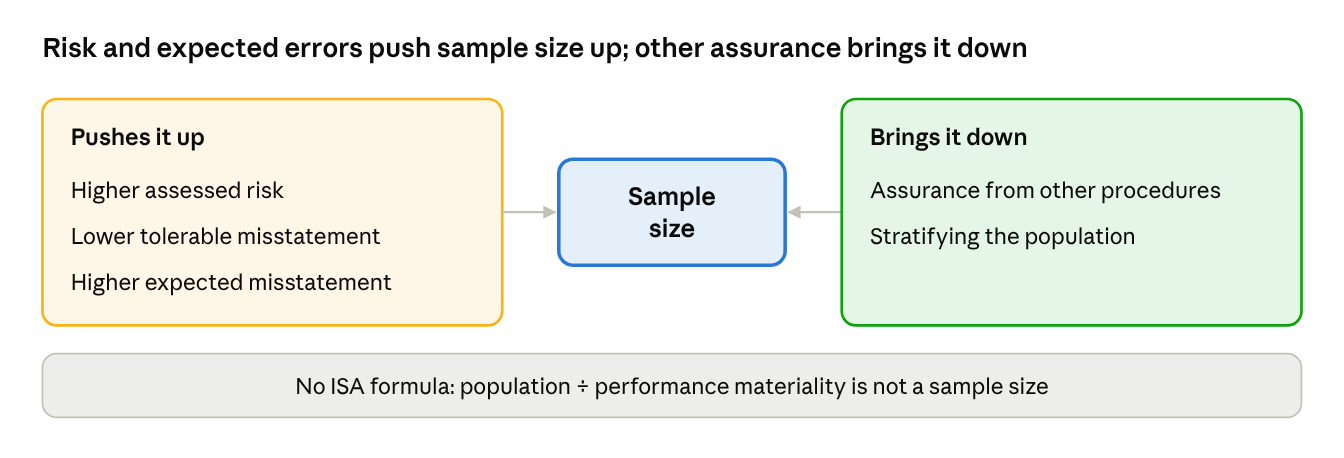
Sample size drivers · tests of details (ISA 530 Appendix 3)
Testing all items above performance materiality is a common strategy, but ISA 530 doesn't require it. If you do, take those items out of the residual population.
4. Validate the population first
A great sample from an incomplete ledger is worthless. Under ISA 500, check that the population covers the right period, is complete with no duplicates or hidden filters, and reconciles to the trial balance before you sample.
5. Found errors? Don't just count them
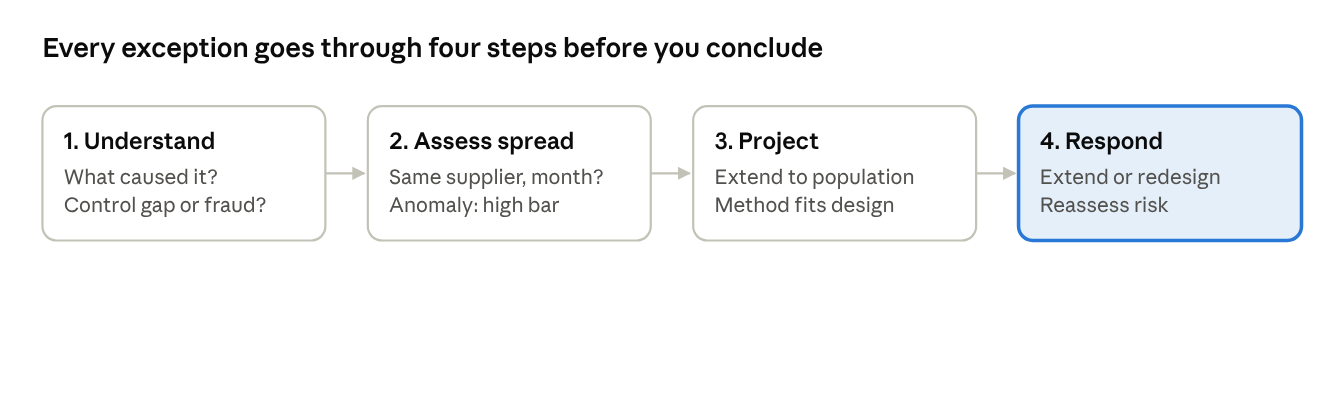
Evaluating sample exceptions · 4 steps
Three errors in 40 invoices don't mean the population is wrong in the same ratio, and errors below materiality can't simply be ignored. Treat an error as an anomaly only with a high degree of certainty, and project misstatements using a method that fits your design.
A bigger sample won't fix a root-cause problem such as an incomplete population or a systemic accounting error. Design extra work around why the error happened.
6. Document the why, not just the what
Under ISA 230, record the objective, population and its validation, method and sample size rationale, exceptions, projection and conclusion. A selection spreadsheet alone is not audit documentation.
7. How Smart Audit helps
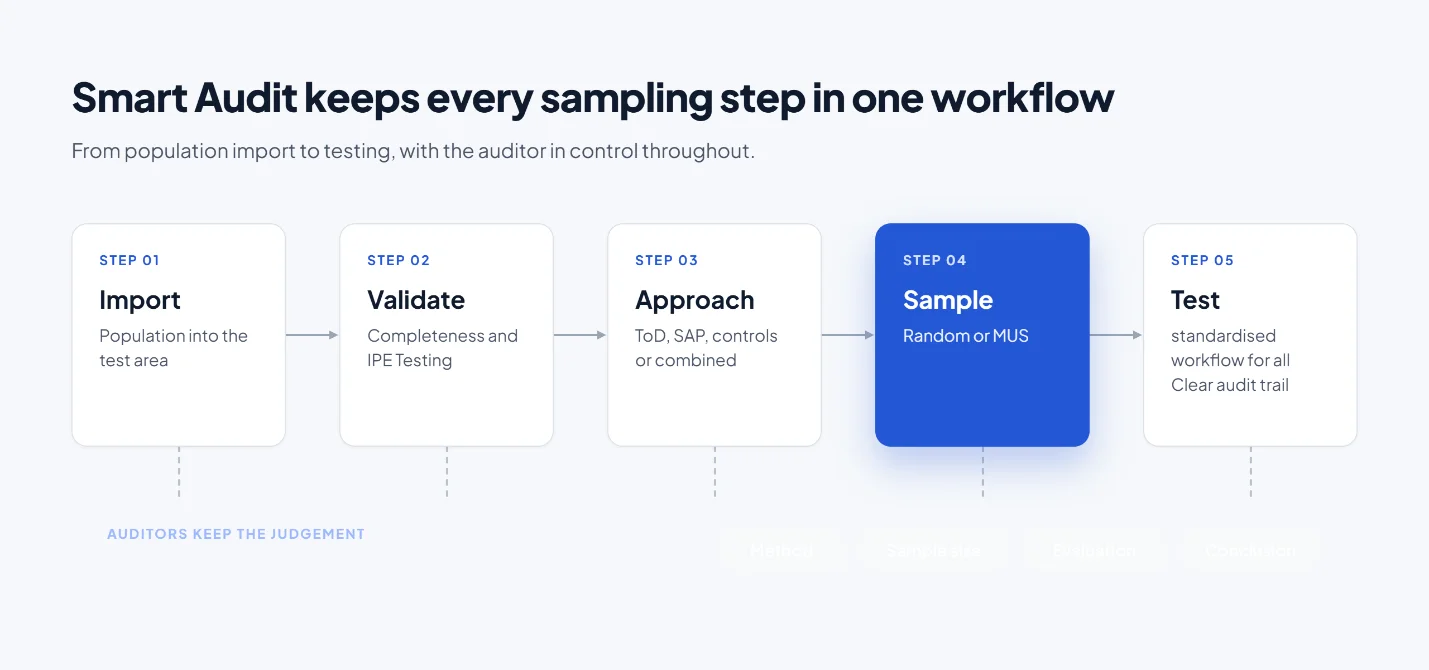
Smart Audit sampling workflow · 5 stages
Smart Audit brings population import, Validation, Approach, Random and MUS sampling and testing into one ISA-aligned workflow. Every decision is traceable.
Effective sampling isn't about testing the fewest items. It's about a defensible basis for your conclusion.
References: ISA 530 (Audit Sampling), ISA 500 (Audit Evidence), ISA 330 (Responses to Assessed Risks), ISA 320 (Materiality), ISA 450 (Evaluation of Misstatements), ISA 230 (Audit Documentation).